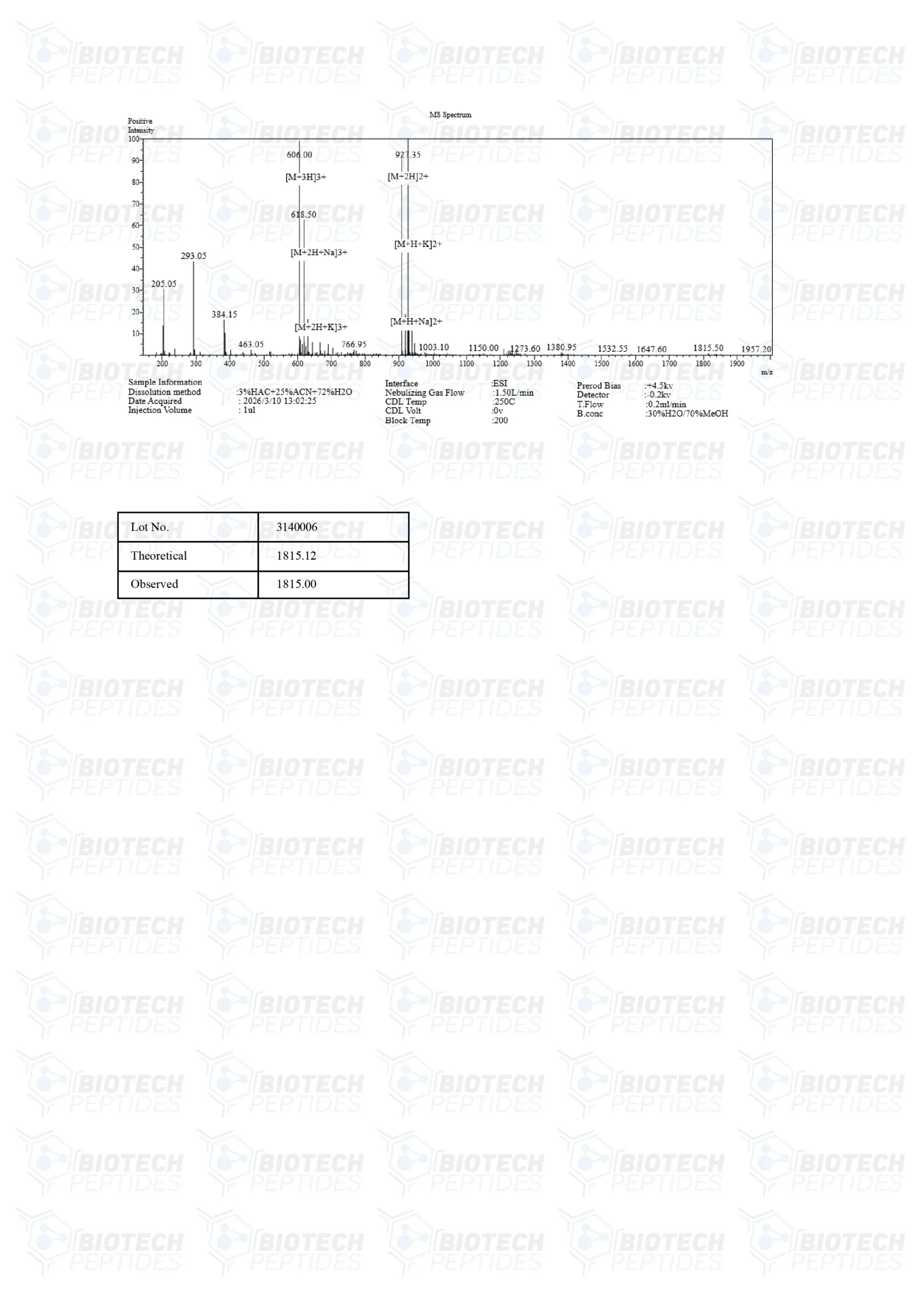
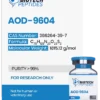
AOD 9604 Peptide
Researchers believe that different regions of the hGH molecule produce different biological effects. AOD 9604 Peptide. Studies suggest that the final 15 amino acids may drive the hormone’s fat-metabolism activity.
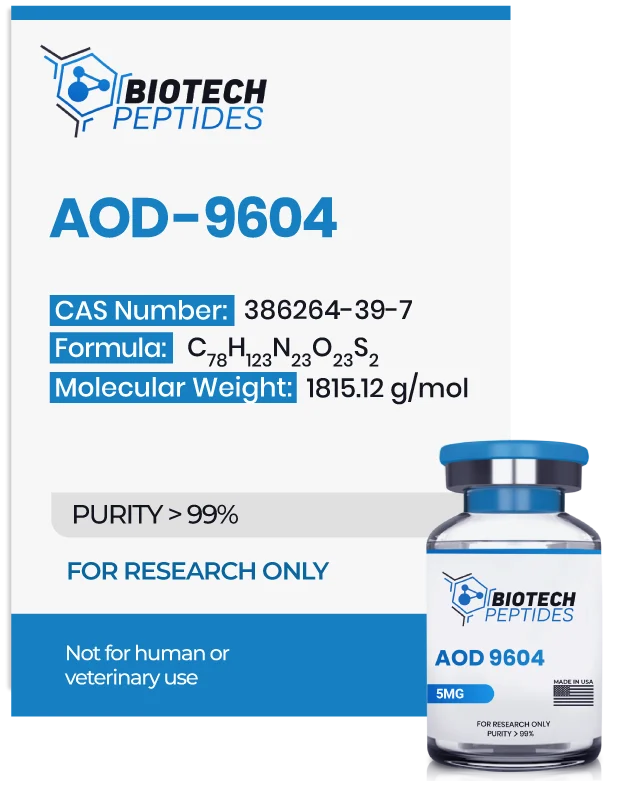
Scientists originally identified this segment as hGH 177-191. They later added a tyrosine residue to improve stability and created AOD 9604. This process produced a 16-amino-acid peptide designed for obesity-related research. AOD 9604 Peptide
Research indicates that AOD 9604 does not interact directly with growth hormone receptors. Because of this, scientists continue to investigate whether the peptide can support fat metabolism without triggering many of the broader effects associated with hGH.
AOD 9604 Mechanism of Action
Fat Metabolism Research
Researchers have primarily studied AOD 9604 in animal models. Several studies reported significant reductions in body weight after peptide exposure.
Unlike hGH, AOD 9604 does not appear to increase IGF-1 levels, insulin resistance, or cell proliferation. As a result, researchers do not associate the peptide with the anabolic effects commonly linked to growth hormone.
Scientists propose that AOD 9604 may support fat metabolism by activating cellular pathways involved in lipolysis. These pathways may encourage adipose tissue to release stored fatty acids.
Impact on Lipases
Researchers also suggest that AOD 9604 may influence lipase activity. Lipases are enzymes that help regulate fat storage and fat breakdown.
Current studies indicate that the peptide does not affect natural hGH production. Researchers have also found no evidence that it acts as a growth hormone secretagogue. In addition, the peptide does not appear to increase or decrease appetite.
Comparison With Growth Hormone
Studies comparing AOD 9604 with hGH produced different results in lean and obese animal models.
In lean models, hGH increased lean body mass. AOD 9604 and placebo treatments did not show the same effect. These findings suggest that AOD 9604 may not contribute significantly to muscle growth or hypertrophy.
In obese models, both hGH and AOD 9604 supported weight reduction. Researchers reported a 40% decrease in adipose tissue in the hGH group and a 28% decrease in the AOD 9604 group.
Potential Limitations
Research suggests that AOD 9604 may have less lipolytic activity than hGH. Scientists also note that neither compound appears to act directly through β3-adrenergic receptors. However, both compounds may increase β3-AR expression, which could improve lipolytic sensitivity.
Unlike hGH, AOD 9604 does not appear to increase insulin resistance. Some anecdotal reports also mention modest improvements in cholesterol levels and insulin sensitivity. Researchers still need additional studies to confirm these observations.
Disclaimer: The products mentioned are not intended for human or animal consumption. Research chemicals are intended solely for laboratory experimentation and/or in-vitro testing. Bodily introduction of any sort is strictly prohibited by law.
Be the first to review “AOD 9604 (5mg)”
Related products
Cellular Research
GHRPs

Bac Water
Peptide Capsules
Bioregulators

Cosmetic Peptides
Cellular Research
Reviews
There are no reviews yet.